
How Does the Horadric Cube Work in Diablo 4: Lord of Hatred
With the arrival of the Lord of Hatred expansion, Diablo 4 introduces one of the most iconic systems from the franchise’s history: the Horadric Cube. Long-time fans of Diablo 2 will immediately recognize its legacy, but this modern version goes far beyond nostalgia. It becomes a central pillar of endgame progression, giving players unprecedented control over gear crafting, item transformation, and build optimization.
For players who enjoy optimizing characters or relying on third-party gaming services to speed up progression, this system also reshapes how value and resources are managed across the entire ecosystem.
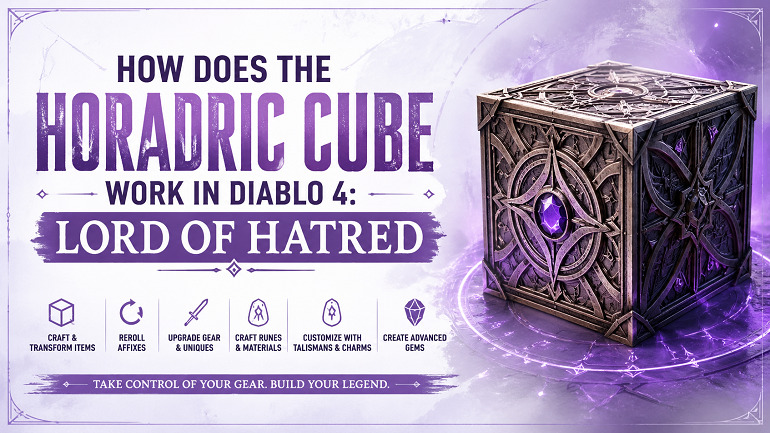
A Revolutionary Crafting System for Endgame Players
Unlike Diablo 4’s earlier item systems that relied heavily on RNG, the Horadric Cube introduces structured crafting with meaningful player agency. Instead of endlessly farming and hoping for the right drop, players can now actively shape their gear progression.
At its core, the Cube allows players to:
Add, remove, and reroll affixes
Transform item types entirely
Upgrade common and rare gear into endgame-ready equipment
Convert duplicate uniques into more powerful versions
Craft runes, charms, and advanced materials
This means that every drop now has potential value. Even unwanted items can be recycled into progress rather than simply being salvaged.
Interestingly, many players preparing for expansion launch are also planning their gaming budgets more carefully, often balancing in-game spending with real-world purchases such as Buy Xbox Live Gift Card to manage entertainment costs across platforms.
Unlocking the Horadric Cube in Lord of Hatred
The Horadric Cube is not available from the start of the expansion. Instead, it is tied directly to the Lord of Hatred campaign progression and unlocks toward the later stages of the story.
Once unlocked, players can access it in Temis, the newly introduced city on Skovos. From there, it becomes a universal system available to all classes.
However, access is expansion-locked. Players without Lord of Hatred will not be able to use the Cube at all, making it a key incentive for purchasing the expansion.
Core Recipes and Gameplay Impact
The Cube introduces a wide variety of crafting recipes that fundamentally change how players approach loot:
1. Item Rerolling and Upgrading
Combine three identical items to generate a new version with improved or altered stats. This is especially useful for chasing perfect rolls.
2. Unique Item Recycling
Three identical unique items can be combined into a refreshed version of the same item. Duplicate drops finally have long-term value.
3. Rare-to-Legendary Conversion
Rare items can be upgraded into random legendary gear, helping players bridge early and mid-endgame gaps.
4. Affix Manipulation
Players can add or adjust affixes using special materials, dramatically reducing reliance on pure RNG.
5. Common-to-Unique Transformation
Even low-tier items can be converted into uniques, giving every drop potential significance.
This system ensures that progression is no longer passive. Instead, players actively build toward their desired loadouts with intention and strategy.
Many gamers supporting long play sessions also invest in convenience options such as an XGPU Subscription to access broader game libraries while focusing their main grind in Diablo 4.
Expansion-Wide Item System Overhaul
The Horadric Cube does not exist in isolation. It is part of a larger overhaul that redefines Diablo 4’s entire item ecosystem:
Talisman System
A new Talisman system introduces Seals and Charms, allowing players to stack affixes and unlock powerful set bonuses. This creates build diversity without requiring full gear dependency.
Item Crafting Expansion
Common, Magic, and Rare items can now roll Ancestral variants with Greater Affixes, meaning even low-tier drops remain relevant deep into Torment difficulty.
Damage Rework
Damage affixes are shifting from additive to multiplicative scaling, significantly increasing the importance of optimized crafting.
Unique Item Changes
Uniques are now more flexible:
Affixes roll from pools instead of fixed stats
Items can be tempered like standard gear
Builds gain more customization freedom
Gem System Rebalance
Gems now provide multiplicative bonuses and introduce new tiers such as Horadric and Flawless Horadric Gems, crafted via Cube recipes.
These systems collectively reinforce the Cube’s role as the central crafting hub of the expansion.
Why the Horadric Cube Matters for Endgame Players
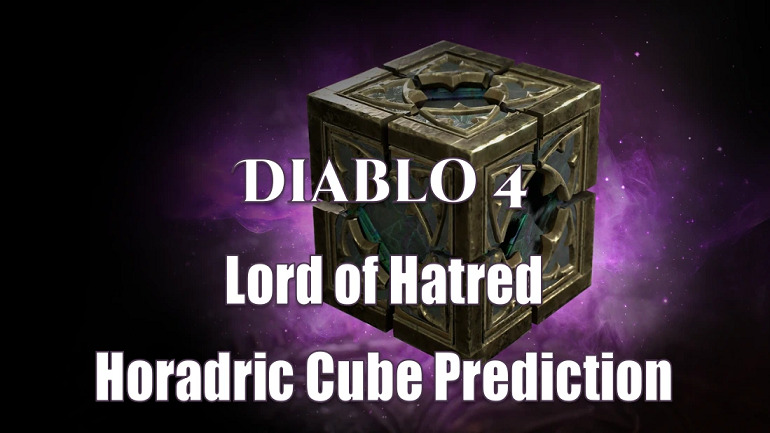
Before this update, Diablo 4’s endgame often revolved around repetitive farming loops. Players would rely heavily on RNG to complete builds, which limited experimentation and long-term engagement.
Now, the Horadric Cube changes that dynamic completely. Players can:
Target specific gear outcomes
Salvage value from duplicate drops
Progress builds intentionally
Reduce dependency on random loot drops
For third-party service communities and trading ecosystems, this also reshapes demand patterns, as crafted progression becomes just as important as raw item acquisition.
Final Thoughts
The return of the Horadric Cube in Lord of Hatred is more than a nostalgic callback—it is a fundamental redesign of Diablo 4’s endgame structure. By giving players control over crafting, rerolling, and item transformation, Blizzard has introduced a system that rewards planning, experimentation, and long-term progression.
As players prepare for launch, many are already organizing their gaming setup, balancing time, resources, and even subscriptions like an Xbox Live Gift Card to streamline their entertainment spending alongside their Diablo 4 journey. For those invested in long-term progression, combining efficiency with tools like a Cheap XGPU Subscription can help maximize overall gaming flexibility while diving deep into the new endgame systems of Lord of Hatred.

%22%20fill%3D%22url(%23linearGradient-1)%22%20fill-rule%3D%22nonzero%22%3E%3Cg%20id%3D%224%22%20transform%3D%22translate(50.000000%2C%201871.000000)%22%3E%3Cpath%20d%3D%22M714.442949%2C40.6265241%20C715.185684%2C41.4224314%20715.185684%2C42.6860985%20714.442949%2C43.4820059%20L697.746773%2C61.3734759%20C697.314529%2C61.8366655%20696.704235%2C62.0580167%20696.097259%2C61.9870953%20C695.539848%2C62.0082805%20694.995328%2C61.7852625%20694.600813%2C61.3625035%20L685.557051%2C51.6712906%20C684.814316%2C50.8753832%20684.814316%2C49.6117161%20685.557051%2C48.8158087%20C686.336607%2C47.9804433%20687.631056%2C47.9804433%20688.410591%2C48.8157854%20L696.178719%2C57.1395081%20L711.589388%2C40.6265241%20C712.368944%2C39.7911586%20713.663393%2C39.7911586%20714.442949%2C40.6265241%20Z%22%20id%3D%22check%22%3E%3C%2Fpath%3E%3C%2Fg%3E%3C%2Fg%3E%3C%2Fg%3E%3C%2Fsvg%3E)